Fat Cells: Battlefield For Undesirable Weight Gain! Weight Management Blog Dr Tague's Center For Nutrition Kansas City & Topeka
Adipose Tissue Maintains An Epigenetic Memory Of Weight Problems After Weight-loss
Collectively, these neuroendocrine adjustments can act on adipose tissues to impact the dimension and variety of resident adipocytes (Fig. 2). Various other studies show that both preadipocytes and adipocytes are receptive to Thyroid Stimulating Hormonal Agent (TSH) and thyroid hormones in a similar fashion (76-- 80). Both the SNS and thyroid hormones have repressive effects on preadipocyte expansion and stimulatory impacts on preadipocyte differentiation. Because of this, a decrease in SNS tone and thyroid axis activity throughout weight upkeep might supply liberal conditions for preadipocyte expansion, while the turnaround of these neuroendocrine inputs throughout weight restore can underlie the hyperplasia. While these neuroendocrine inputs provide a possible explanation for both metabolic and cellularity adjustments with weight management and reclaim, their real payment to the adaptive response in Pelvic health adipose tissues requires further study.Just How Do Calories Turn Into Fat?
- Dr. Tague is an Alpha Omega Alpha honors grad of Tulane University School of Medicine in New Orleans.
- We described enhancers that acquired (and maintained) H3K4me1 in obesity and WL 'new enhancers'.
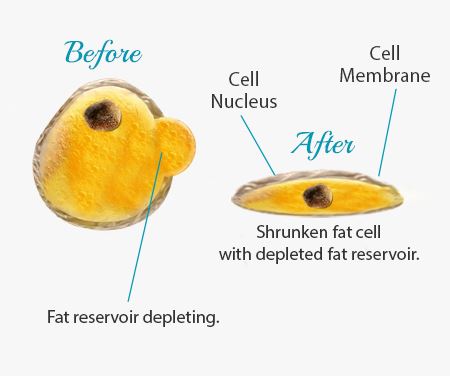
- The fat cell stays, like a vacant balloon waiting to be replenished.
- Some sources also keep in mind that new fat cells can create under particular problems, particularly with sustained excess calorie consumption over time.
Assessing adipogenesis capacity, we found that the SVF from epiAT of HC and HHC mice built up lipids in reaction to insulin yet fell short to separate, unlike controls (Extended Information Fig. 10b). Adipogenesis was somewhat impaired in the SVF from ingAT of WL mice compared with controls (Extended Information Fig. 10c). These searchings for indicate that consistent cellular memory provides phenotypic repercussion ex vivo.

Adipocytes Control Food Consumption And Weight Gain Back By Means Of Vacuolar-type H+ Atpase
We carried out snRNA-seq of epiAT from HCH and CCH mice and observed greater macrophage infiltration in both HCH and CCH epiAT compared to the WL time point, with a better seepage in HCH epiAT (Fig. 5i and Extended Data Fig. 10l). The proportion of LAMs was higher in HCH epiAT, comparable to that of H and HC mice, whereas CCH epiAT showed a higher percentage of LAMs compared with CC epiAT, suggesting LAM seepage occurred early during HFD feeding (Extended Data Fig. 10m). It's true that how much you evaluate is associated with the amount of calories you absorb, melt, and shop. But your genes, your metabolic process, and your environment all contribute. You may have listened to that the fat you lose can become muscle.F, Gene counts and the number of UMIs per designated cell type in the omAT examples from the MTSS More help (left) and LTSS (right) research study. G, Gene counts and the variety of UMIs per designated cell enter the scAT examples from the LTSS (left) and NEFA (right) study. Raw gene and promoter/enhancer-specific height count matrices were log-normalized using the R bundle lawn edger. PCA of the normalized count matrices was done using the prcomp feature of R bundle statistics v. 3.6.2.